Chair Yoga and Gentle Exercises for Calm Progress and New Friendships
Some days, the hardest part of movement is not the movement itself. It is getting started, staying with it, and believing that small steps count.
Chair yoga and gentle exercises offer a kind way in. They make movement feel more possible, especially for anyone who wants to build strength, improve flexibility, support balance, ease stiffness, or simply enjoy a calmer hour in the week.
There is no need to twist into dramatic shapes or keep up with anyone else. (No one looks around either - all busy concentrating on their own practice!)
A chair, a little space, and a willingness to try are enough.
The real magic comes from regular practice. One class can leave the body feeling looser and the mind a little quieter.
A steady routine can help those benefits grow.
Week by week, familiar movements begin to feel smoother.
Breathing becomes easier to follow.
Poses feel less confusing.
Confidence builds in a slow, steady way.
Honour your body's limitations! Start easy, grow into strength.
This article is for general information only.
If there are health concerns, pain, recent surgery, dizziness, or a medical condition, it is best to speak with a GP, physiotherapist, or qualified health professional before starting a new exercise routine.

Gentle movement meets the body where it is
Chair yoga and gentle exercises work because they can be adapted.
A pose can be done seated, standing with support, or using a wall or chair for balance. Movements can be smaller or larger.
A stretch can last a few breaths or a little longer.
The aim is not to copy a perfect shape. The aim is to move with care.
This makes the practice suitable for many people, including those who:
Feel stiff after sitting for long periods
Want to move more but prefer a low-impact option
Are rebuilding confidence after time away from exercise
Need a calmer class than a fast fitness session
Like the support and structure of moving with a teacher
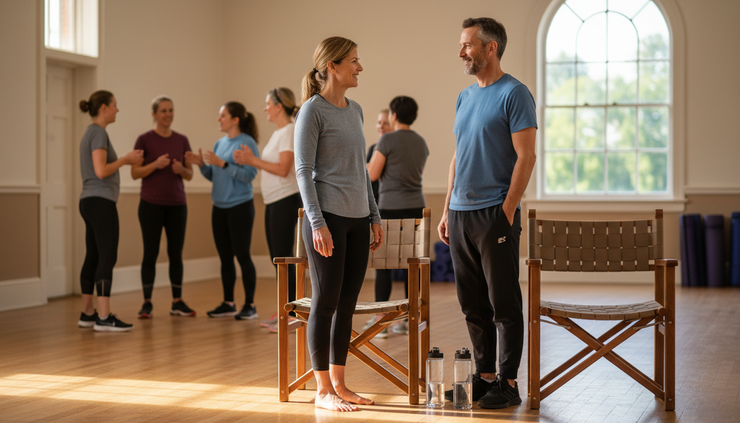
Like to engage with others - there is always a chat afterwards - its a social too!
A typical class may include gentle shoulder rolls, seated twists, ankle circles, side bends, supported standing stretches, breathing exercises, and a short relaxation.
These simple movements might not look dramatic, but they can feel deeply useful.
For example, seated shoulder rolls can release tension around the neck and upper back. Gentle ankle, hip and foot movements can wake up the lower legs.
Slow side stretches can create space through the ribs, which may make breathing feel easier. These are ordinary movements, but they can have a real effect when practised with attention.
The chair is not a sign of weakness! It is a helpful prop. It brings the floor closer, offers support, and allows people to focus on how the body feels rather than worrying about falling or straining.
Consistency turns small efforts into lasting change
Attending classes regularly can make a noticeable difference.
The body often responds well to repetition, especially when the movements are gentle and clear. A weekly class gives the body a chance to remember. A few short practices between classes can help even more.
Consistency does not mean pushing through tiredness or ignoring discomfort. It means creating a rhythm that feels realistic.
For some, that may be one class a week.
For others, it may be ten minutes of movement most mornings, plus a weekly group session.
And then there are those attending more than once in a week - because they enjoy it and the benefits are clear.
The benefit of attending class week after week is that progress becomes easier to see.
A movement that felt awkward in the first session may become familiar by the fourth.
A balance exercise that once needed both hands on the chair may eventually need just one.
The breath may settle faster.
The mind may arrive more easily.
A simple routine might look like this:
Practice habit | Why it helps |
Attend the same class each week | Familiar timing makes it easier to keep going |
Repeat favourite movements at home | Short practice keeps the body comfortable between classes |
Notice one small change each session | Progress becomes encouraging rather than invisible |
Rest when needed | Safe movement builds trust in the body |
The hardest weeks are often the ones when consistency matters most.
If the weather is poor, energy is low, or motivation has dipped, showing up gently still counts. Even sitting through the class and doing only half the movements can keep the habit alive.
Progress often comes from ordinary attendance, not from bursts of effort.
There is comfort in knowing that nobody has to feel wonderful before going to class.
The class itself can be the thing that helps the day feel better.

Progression matters more than perfection
Many people arrive at yoga with a quiet worry that they will not be flexible enough, balanced enough, or fit enough.
Chair yoga turns that idea on its head. The practice begins with the body as it is today.
Progression is the goal. Perfection is not.
A pose does not need to look a certain way to be valuable.
A forward fold may be a small hinge from the hips rather than a deep bend.
A twist may be a gentle turn through the upper body rather than a big rotation.
A standing balance may involve holding the chair the whole time.
These versions still count.
A helpful question during practice is, “Can I breathe here?” If the answer is yes, the pose is probably in a kinder place.
If the breath becomes strained, the movement may need to soften.
Teachers often offer options such as:
Keeping both feet flat on the floor
Reducing the range of movement
Using the chair for extra support
Staying seated instead of standing
Resting whenever the body asks for it
This flexible approach helps people build trust. It also reduces the pressure to compare. Someone else may lift an arm higher or hold a pose longer, but that does not make their practice better. It simply makes it theirs.
Progress might look like reaching a little further.
It might also look like knowing when to stop. It might mean feeling steadier during a standing pose, or feeling less anxious about joining in.
These are all signs of growth.
The beauty of gentle exercise is that there is always another layer.
First comes learning the shape.
Then comes breathing within it.
Then comes relaxing unnecessary effort.
Over time, a familiar pose can become more comfortable, more spacious, and more calming.
The calming effect is part of the practice
Gentle movement can be soothing because it asks the body and mind to slow down together.
The pace is steady. The breath has room. The focus moves away from noise, worry, and rushing, and back towards simple sensations.
Many chair yoga classes include breathing practices.
These may be as simple as noticing the inhale and exhale, lengthening the breath slightly, or matching movement to breathing.
For example, arms may lift with an inhale and lower with an exhale.
This rhythm can feel settling.
Relaxation at the end of class is not just a pleasant extra.
It gives the nervous system time to absorb the practice. Sitting quietly with the feet grounded, shoulders soft, and eyes closed or lowered can create a peaceful finish.
Some people leave feeling lighter. Others feel sleepy, settled, or simply more like themselves.
Gentle exercise may also help release physical tension. When shoulders unclench, the jaw softens, or the back feels less tight, the mind often follows.
The body sends a message that it is safe to ease up.
A calming practice does not need candles, special music, or a perfect setting.
It needs a pace that allows awareness.
It needs permission to pause.
Most of all, it needs a kind attitude.
Try this simple seated breathing practice for a quiet moment:
Sit tall but not stiff, with both feet on the floor.
Let the hands rest on the thighs.
Breathe in through the nose if comfortable.
Breathe out slowly through the nose or mouth.
Repeat for five calm breaths.
If counting helps, try breathing in for three and out for four. If counting feels stressful, leave it out.
Comfort matters more than technique.
Classes can become a gentle social lifeline
Movement is only one part of the experience.
A good class can also bring people together.
Regular attendance creates familiar faces.
At first, conversation may be no more than a smile, a hello, or a shared laugh when everyone forgets left from right. Over time, those small moments can grow into friendship. People notice when someone has been away.
They ask how the week has been.
They share tips, stories, and encouragement.
This social side matters. Enjoying the company of others can make it easier to keep coming back. A class becomes more than exercise on the calendar.
It becomes a warm part of the week.
For someone who feels nervous about joining a class, it can help to arrive a few minutes early.
There is no need to say much.
Sitting down, getting settled, and smiling at the person nearby is enough.
Most gentle exercise groups understand that people come with different bodies, different histories, and different levels of confidence.
Friendship in a class often grows naturally through shared routine.
People practise the same movements, hear the same teacher’s reminders, and celebrate small wins together.
That shared experience can make the room feel safe and welcoming.
A few simple ways to enjoy the social side include:
Learning one or two names each week
Asking someone how long they have attended
Staying for a short chat after class if time allows
Encouraging someone who is new
Inviting a friend, neighbour, or family member to try a session
The aim is not to become the most outgoing person in the room.
It is to let connection happen at a comfortable pace.
Just as with the poses, progression is enough.
How to make chair yoga a steady part of life
Building a lasting habit starts with making it easy to return. The best routine is one that fits real life, not an ideal week that rarely happens.
Choose a class time that feels manageable. Keep comfortable clothes ready. Put the class in the diary. If transport is needed, plan it before the day arrives. Small preparations reduce the chance of missing a session.
It also helps to set a gentle intention. Instead of aiming to master every pose, choose something simple:
“I will attend four classes this month.”
“I will move with kindness.”
“I will notice my breathing.”
“I will rest when I need to.”
“I will speak to one person after class.”
These intentions support the kind of progress that lasts.
They focus on showing up, paying attention, and enjoying the process.
At home, keep practice short and familiar. A few seated stretches after breakfast or before bed can be enough.
Repeat movements from class rather than searching for endless new routines.
Familiarity builds confidence.
It can also be helpful to track how the body feels. This does not need to be detailed. A simple note in a diary can work:
Felt calmer after class
Shoulders less tight today
Balance practice felt steadier
Enjoyed chatting afterwards
Needed more rest, and that was fine
These notes remind people that progress is happening, even when it feels slow.
A gentle step forward is still a step forward
Chair yoga and gentle exercises offer more than stretches.
They create a steady path towards confidence, calm, and connection.
The movements can support mobility and ease tension.
The breathing can settle the mind.
The class routine can bring structure to the week.
The people in the room can become familiar, friendly, and encouraging.
The key is to keep coming back.
Not perfectly.
Not forcefully.
Just regularly enough for the body to learn and the habit to grow.
Some weeks will feel easier than others.
Some poses will make sense straight away, while others may take time. That is part of the practice.
Progress can be quiet. It can look like a deeper breath, a softer shoulder, a steadier stand, or the confidence to smile at someone new.
Listen to your body.
A chair, a welcoming class, and a gentle willingness to begin can open the door to calmer movement and new friendships.
The next step does not need to be big.
It only needs to be taken.......


Comments